Whilst there are many fundamental elements of food hygiene that you need to learn to obtain any qualifications, they are primarily rooted in four core principles known as the ‘4Cs’
These are, in no particular order:
All four are vital principles that your catering establishment must follow to maintain a high rating, with these mandatory ratings often meaning the difference between a successful, trusted business and mandated closure.
What Do You Need To Know About Cooking Food Safely?
Many food items need to be thoroughly cooked to avoid harmful bacterial infections and food poisoning, but whilst cooking at home is largely a matter of following the instructions on food packaging, catering companies need to have robust plans for evenly heating food at scale.
The biggest concern is raw meat, which is especially important since certain types of meat have the flexibility to be cooked to varying levels, such as lamb and beef, whilst others such as most seafood, pork and chicken must be cooked thoroughly to kill bacteria.
Food needs to reach a core temperature of 70 degrees Celsius for at least two minutes, and must be kept above 63 degrees Celsius if you are using a bain-marie to keep it hot for serving.
This is, of course, the start of safe cooking education, and a full course will explain more complete details surrounding cooking, storage and how to tell if something is safe to eat.
What Do You Need To Know About Cleaning A Kitchen?
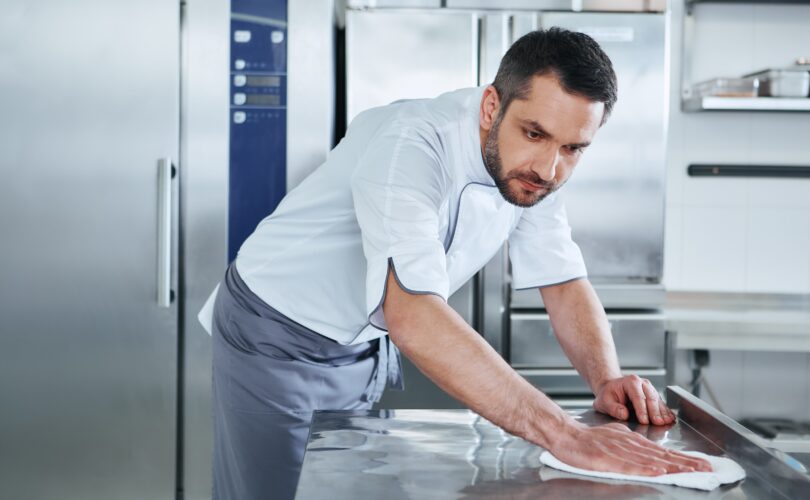
The most common reason why restaurants and other food businesses are closed is due to unclean kitchens, which makes thorough cleaning of your work surfaces absolutely essential to avoid spreading harmful bacteria, viruses and diseases to customers.
You must ensure that everything that comes into contact with food is regularly cleaned, especially:
- Chopping boards and prep surfaces
- Dishes, cooking utensils and cookers
- Cleaning materials, spongers, scourers and dish cloths.
- Light switches, smartphones, bins, door handles and anywhere else in your facility likely to be touched regularly.
As well as this, food waste needs to be disposed of carefully, and every staff member who handles food must thoroughly wash their hands if they come into contact with raw food.
How Cold Must Ingredients And Food Be Stored?
Many food items need to be kept chilled to stop bacteria from growing and food from going bad, which, according to UK food standards, means an ambient temperature of under eight degrees Celsius.
These include cooked dishes, ready-to-eat meals and other foods with a clear use-by date.
You can freeze many types of food to ensure it lasts longer, but you must ensure that all food stored in this way is completely defrosted before you cook it, unless there are instructions which say you are able to cook it from frozen.
How Do You Avoid Cross-Contamination?
One of the most misunderstood aspects of food hygiene is cross-contamination, where, due to poor storage and cleaning practices, bacteria spreads from one type of food to the next, either through storing raw food close to cooked food or failing to clean surfaces and utensils.
Raw meat must be kept separate from food you can serve cold, and you must wash your hands, surfaces and equipment thoroughly between cooking tasks.